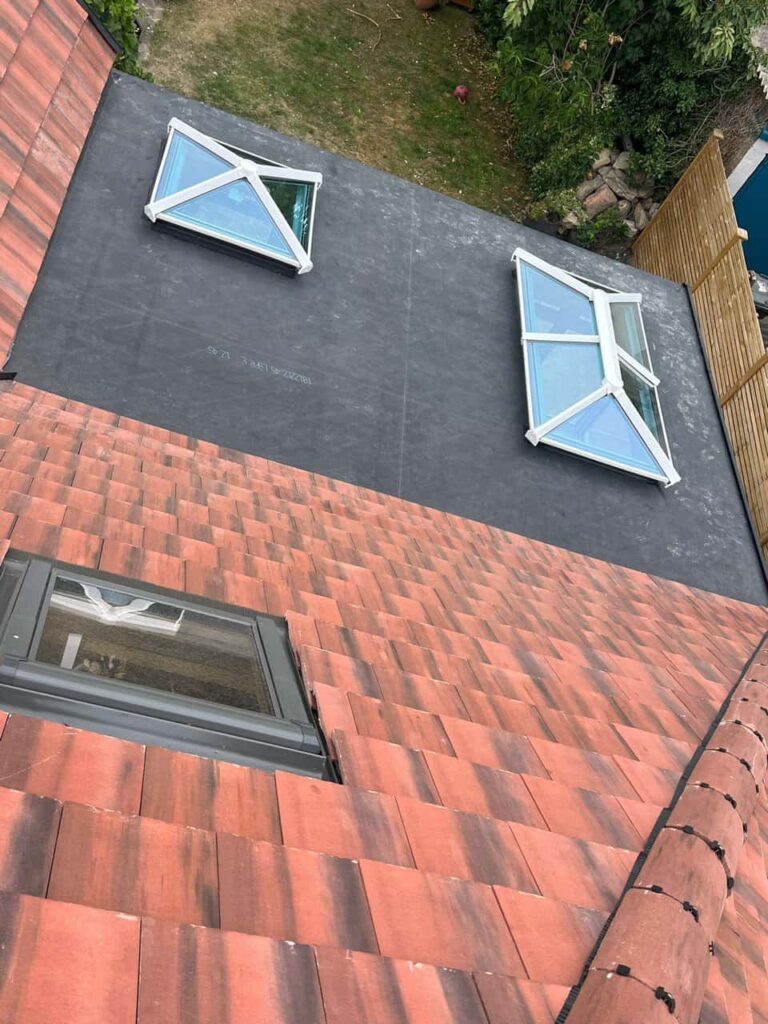
A roof can develop problems earlier than expected when materials have not been installed correctly. Tiles may move, flashing can separate and water may enter through poorly formed junctions, even when the roofing materials themselves remain in reasonable condition.
For property owners in Sherborne, Dorset, professional roofing work can identify whether a defect has resulted from natural deterioration or weaknesses in the original installation. Addressing the underlying construction problem is essential if a repair is to provide a reliable result.
How Poor Roof Installation Can Be Corrected
Roofing components work as a complete system. Tiles, underlay, battens, fixings, flashing, ventilation and drainage details must all be correctly positioned and compatible. A defect in one area can place unnecessary pressure on several others.
Identifying the Source of Water Ingress
An internal damp patch does not always reveal where rain is entering. Water may pass beneath incorrectly fitted tiles, follow the underlay and travel along roof timbers before becoming visible.
A professional roofer will inspect the wider roof rather than repairing only the area above the stain. This helps locate the true entry point and determine how far moisture has spread.
Correcting Poorly Fitted Tiles or Slates
Tiles and slates must overlap correctly and suit the pitch of the roof. Inadequate headlaps, uneven alignment or unsuitable materials can leave gaps through which wind-driven rain can enter.
Corrective work may involve lifting the affected section, realigning the covering and replacing unsuitable or damaged materials. The surrounding fixings and battens should also be checked before the roof is reinstated.
Replacing Inadequate Fixings
Roof coverings rely on suitable nails, clips and other fixings to remain secure. Too few fixings, incorrect positioning or unsuitable materials can allow tiles to slip or lift during windy conditions.
Professional repairs can replace failed fixings and secure the covering correctly. Where the problem affects a larger area, additional tiles may need to be lifted to provide access.
Repairing Incorrectly Installed Battens
Battens must be correctly spaced, securely fixed and capable of supporting the chosen roof covering. Poor spacing can affect tile overlaps, while weak or uneven battens can leave the surface distorted.
The affected covering may need to be removed so damaged or incorrectly positioned battens can be renewed. This provides a stable and consistent base for the tiles or slates.
Restoring Defective Underlay
Underlay helps direct any water that passes beneath the outer covering towards the roof edge. If it has been poorly lapped, punctured or incorrectly fitted around penetrations, moisture can reach the roof structure.
Repairing the visible surface alone may not resolve this problem. Selected areas may need to be opened so that defective underlay can be replaced and integrated properly with the surrounding material.
Reconstructing Flashing and Roof Junctions
Chimneys, valleys, walls and roof penetrations require carefully formed weatherproof details. Flashing that is too short, poorly secured or inadequately integrated with the covering can cause recurring leaks.
Professional work may involve removing the defective flashing and rebuilding the junction. The adjoining tiles, mortar, underlay and timber should also be inspected for hidden moisture damage.
Improving Valley Construction
Roof valleys carry considerable volumes of rainwater. Incorrect falls, restricted channels or poorly cut surrounding tiles can cause water to overflow beneath the covering.
Corrective work may include clearing the water route, replacing the valley lining and repositioning adjoining materials. The finished detail must allow water to move freely without entering the roof.
Addressing Ridge, Hip and Verge Problems
Ridge tiles, hips and verges can loosen when mortar has been poorly applied or mechanical fixings are inadequate. Cracking and movement may then allow water beneath the adjoining covering.
A lasting repair requires unstable materials to be removed before the detail is reconstructed. Applying new mortar or sealant over loose sections is unlikely to correct the underlying weakness.
Correcting Poor Roof Ventilation
Inadequate ventilation can allow condensation to develop inside the roof space. This moisture may dampen insulation and timber, creating symptoms that resemble a roof leak.
A professional assessment can distinguish condensation from external water ingress. Suitable ventilation measures may then be introduced without compromising the weather resistance of the roof.
Resolving Drainage and Roofline Defects
Incorrect roof falls, poorly positioned gutters or inadequate edge details can prevent rainwater from leaving the roof efficiently. Water may collect around junctions or run behind fascia boards.
Professional work can correct the relevant levels, outlets and roof-edge details. Drainage should be considered alongside any surface repair to prevent repeated saturation of the same area.
Repairing Damage Caused by Earlier Work
Poor installation may already have affected materials beneath the roof covering. Once the defective section is opened, a roofer may discover:
- Torn or damp underlay
- Weakened battens
- Corroded fixings
- Stained or softened timber
- Wet insulation
- Cracked neighbouring tiles
- Incompatible repair materials
These issues should be addressed before the covering is reinstated. Leaving concealed deterioration in place can allow the problem to continue.
When Is a Localised Repair Suitable?
A focused repair may be appropriate when poor workmanship affects one junction or a limited roof section and the surrounding materials remain sound. The defective components can be removed, corrected and properly integrated with the existing roof.
If installation problems appear across several slopes or involve widespread defects in the battens, underlay and covering, a broader repair or re-roofing may be more suitable. The decision should be based on inspection rather than assumption.
Why Professional Assessment Matters
Poor installation problems are often interconnected. Replacing a slipped tile will not provide a dependable solution if incorrect batten spacing or inadequate fixing caused it to move.
A thorough assessment considers the visible fault, the concealed supporting layers and the way water moves across the complete affected area. This allows the repair to correct the source rather than cover the symptom.
Conclusion
Professional roofing work can address poor installation by correcting tile alignment, fixings, battens, underlay, flashing, ventilation and drainage details. The extent of the work depends on whether the defect is localised or repeated across the roof.
MCM Roofing Repairs Sherborne provides professional roof inspections and repairs in Sherborne, Dorset. If previous workmanship has left your roof with recurring leaks or unstable materials, contact our team to arrange an assessment and determine the most appropriate solution.
Call us on: 01935 312 694
Click here to find out more about MCM Roofing Repairs Sherborne
Click here to complete our contact form and see how we can help with your roofing needs.